
Call Us Today

Test Pumping: Determining Borehole Yield and Reliability
Test Pumping in boreholes is a process used to determine how much water a borehole can produce and how the underground water source (aquifer) behaves when water is pumped out. It is an important procedure which must be accurately completed to determine the system size that should be installed to effectively serve the borehole.
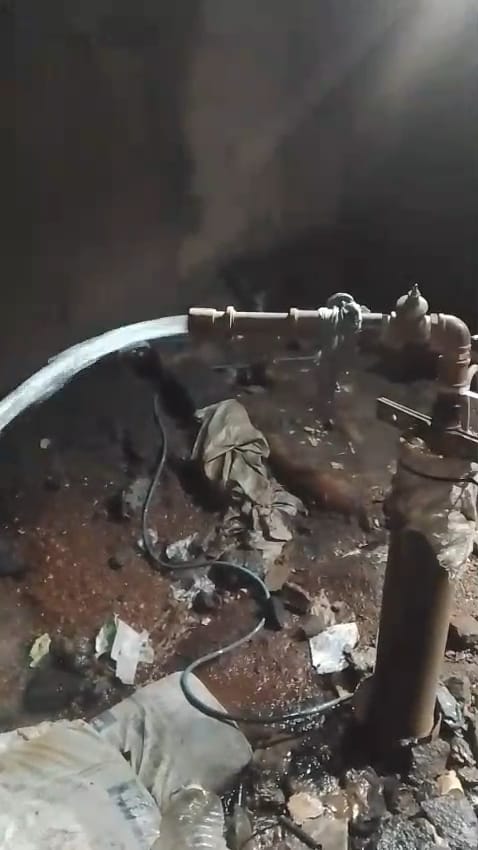
After drilling our boreholes, prior to equipping with a pump, we perform test pumping by pumping water continuously for 24 hours or more while measuring how the water level in the borehole oscillates. This helps in precise determination of whether the borehole can supply water reliably without running dry and what size of motor, pump, solar system, and cables should serve the system robustly.
Purpose of Test Pumping
Test pumping is done to:
- Determine borehole yield: How many litres of water the borehole can produce per hour.
- Assess aquifer capacity: How strong the underground water source is.
- Determine safe pumping rate: The amount of water that can be pumped without depleting the aquifer.
- Check water level recovery: How quickly the water level returns after pumping stops.
- Design the pumping system: Helps technicians to choose the correct pump size and capacity.
Why It Is Important
Test pumping ensures that a borehole system is efficient, sustainable, and reliable, preventing over-pumping and helping design a water system that can supply water for many years.
💧 Test pumping proves whether a borehole can produce enough water safely and continuously.